Are There Crocs In Litchfield? What To Know Before A Swimming Tour
Saltwater crocodiles can be in any Top End waterway. What NT Parks actually says about crocs and swimming in Litchfield, and how guided day tours from Darwin handle the risk.
Saltwater crocodiles live in salt and fresh water across the Top End, and the official Be Crocwise guidance does not carve out an exception for Litchfield. NT Parks says plainly that the animals "can be in any Top End waterway" and that "it is never completely safe to enter the water." That is the honest starting point for anyone booking a swimming day tour from Darwin, and it is also the reason the park runs the system it does: surveyed swimming holes, posted signs, and season rules that close some water to swimming entirely.
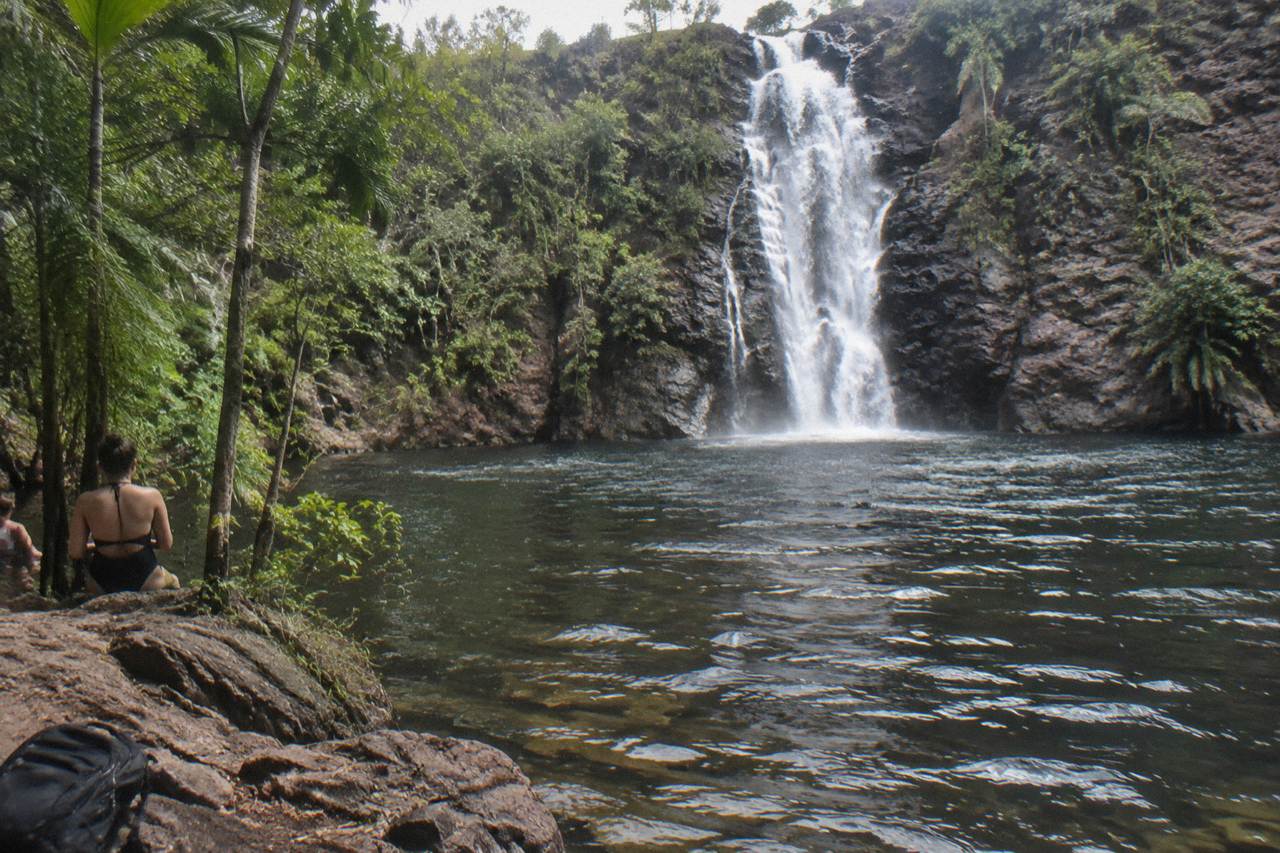
The good news sits right beside the warning. Litchfield's main swimming holes are actively managed. Parks and Wildlife tests water quality, checks water flow and carries out crocodile surveys, and a swimming area is only open when a swimming area open sign says so. Follow the signs and the season table and a swim at Florence Falls or Buley Rockhole is a normal, managed part of a Litchfield day trip. This article walks through what the official rules actually say, which waterholes are signed for swimming and when, and how the guided tours from Darwin handle the same rules on the ground.
Yes, saltwater crocodiles can be present in Litchfield's waterways, exactly as they can be in any Top End water. The park is not croc-free, and no honest source will tell you it is. The safety system is not the absence of crocodiles but active management: surveyed swimming holes, trapped and removed animals where found, and posted signs that open or close each swimming area.
“Friendly, fun driver. Delicious freshly prepared lunch. Beautiful waterholes. Exciting croc tour. Loved it.”
The official wording is worth reading in full. Saltwater crocodiles "live in salt and fresh water in the Top End and are dangerous", and they "can be in any Top End waterway". Be Crocwise, the Northern Territory's crocodile safety program, backs that with the rule that matters most in Litchfield: "Only swim in an area that has a swimming area open sign. If it does not have a swimming area open sign, do not swim in this area. The area may not be safe or free from saltwater crocodiles."
That sign rule is the whole game. Parks and Wildlife tests water quality, checks water flow and carries out crocodile surveys at the managed swimming holes, and the sign is the visible output of that work. When a swimming area at Wangi or Florence is signed open, the surveys and checks behind that sign are what let you swim there with confidence. When an area has no sign, or a closed sign, the water may look identical to the signed pools a kilometre away, and it is still off limits.
For visitors on a tight schedule, the practical version is simple. Swim only at the managed holes, only when signed open, never alone, and never above a waterfall or off rock ledges. A guided day tour from Darwin builds that discipline into the day: the guides take guests to the managed swimming holes and work to the posted status, which is one reason travellers who are nervous about crocodiles often prefer a guided swimming day over a self-drive. The guide to Litchfield National Park Tours covers the full range of those day trips.
Where Do Saltwater Crocodiles Live In The Top End?
Saltwater crocodiles live in both salt and fresh water across the Top End, despite the name, and NT Parks states they can turn up in any Top End waterway. That includes rivers, billabongs, creeks and swimming holes. Nobody can promise a Litchfield pool is croc-free, which is why the sign system, not an absence claim, is the official safety mechanism.
The name misleads people. A "saltwater" crocodile is not confined to the coast. The species moves upstream into freshwater creeks, billabongs and gorge pools, and Be Crocwise treats every Top End waterway as potential crocodile habitat. That is why the guidance never softens: "It is never completely safe to enter the water." NT Parks publishes these rules on its swimming in parks safety page, and the Be Crocwise program repeats them for rivers, camps and boat ramps across the Territory.
Litchfield sits inside that landscape. The park is about 1,500 km2 of plateau, creeks and waterfalls about 120 km south-west of Darwin, and its waterways connect to the same river systems crocodiles use throughout the region. The park's swimming holes are swimmer-friendly because they are managed, surveyed and signed, not because a crocodile could never physically reach them. The distinction matters when you are choosing where to swim and how much weight to put on any "safe swimming" label.
What the management looks like in practice:
| Official safety element | What it means for swimmers |
|---|---|
| Crocodile surveys | Parks and Wildlife carries out crocodile surveys at managed swimming areas |
| Swimming area open sign | The only green light: if there is no sign, do not swim |
| Season rules | Some holes are dry-season swimming only; others stay open all year except extreme flooding |
| Water quality and flow checks | Parks tests water quality and checks water flow alongside the croc surveys |
| Be Crocwise behaviour rules | Camp at least 50 m from water, never feed or approach crocodiles |
The behaviour rules matter as much as the surveys. Camp at least 50 m from the water, never feed or approach a crocodile, and keep children supervised near any waterway. None of that is Litchfield-specific trivia; it is the standard Top End playbook, and it applies whether you arrive on a coach tour or in your own car.
Which Litchfield Swimming Holes Are Signed For Swimming?
Wangi Falls is dry-season swimming only per the official seasonality table. Florence Falls, Buley Rockhole and the Cascades are listed all year except during extreme flooding. Walker Creek, Tjaynera Falls, Surprise Creek Falls and Central Valley are dry-season only. Tolmer Falls, Greenant Creek and the Lost City are no-swimming locations, full stop.
The official table is the clearest thing NT Parks publishes about Litchfield water, and it is worth knowing before you book, because a dry-season visitor and a November visitor can face different signs at the same waterfall. Wangi Falls carries a dry-season-only status for swimming, which is worth building your plans around if a Wangi swim is the reason you are going. Florence Falls and Buley Rockhole, the two most tour-busy swimming stops, are listed all year except during extreme flooding, and the Cascades carries the same status.
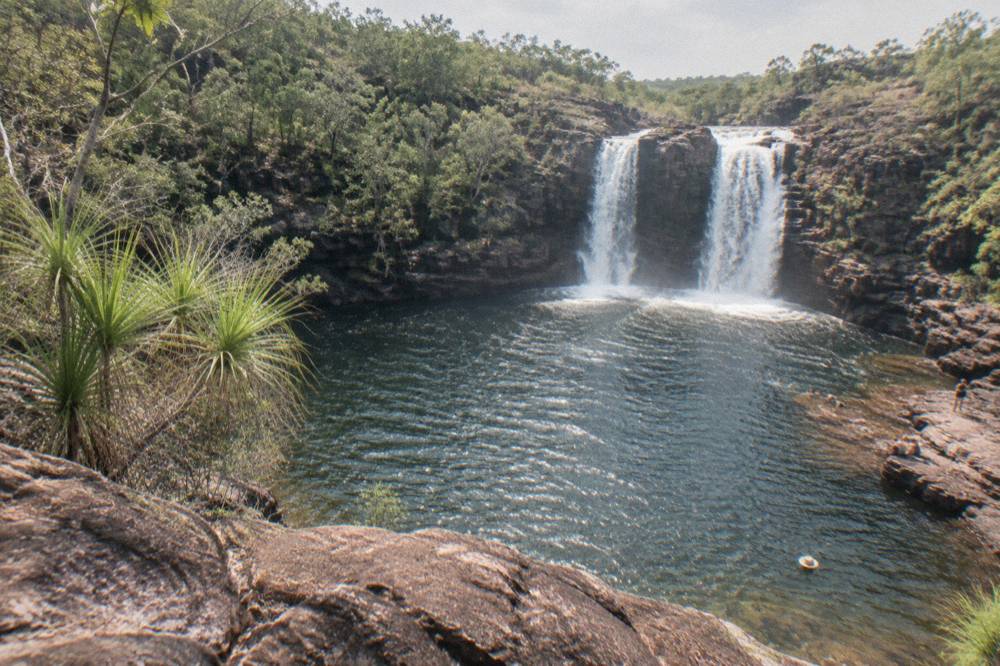
The closed list is just as firm. Swimming and camping are not allowed at Tolmer Falls. At Greenant Creek, the plunge pool and the area downstream of Tjaetaba Falls are a sacred site, and swimming is not permitted; the tiny pool above the falls is not recommended. The Lost City is a no-swimming location as well. None of these are judgement calls, and a guide who knows the park will not treat them as negotiable.
| Litchfield waterhole | Official swimming status |
|---|---|
| Wangi Falls | Dry season only |
| Florence Falls | All year except during extreme flooding |
| Buley Rockhole | All year except during extreme flooding |
| Cascades | All year except during extreme flooding |
| Walker Creek | Dry season only |
| Tjaynera Falls (Sandy Creek) | Dry season only |
| Surprise Creek Falls | Dry season only |
| Central Valley | Dry season only |
| Tolmer Falls | Swimming not allowed |
| Greenant Creek / Tjaetaba Falls | Do not swim; sacred site |
| The Lost City | No swimming |
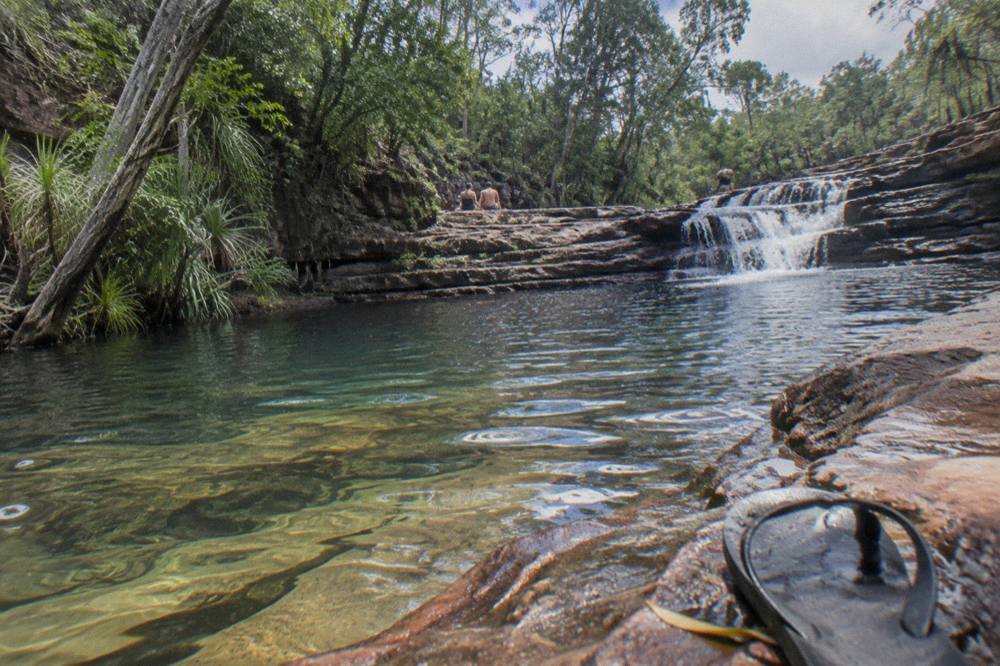
Two practical details round this out. Wangi is described by NT Parks as the most accessible swimming hole in Litchfield, with a paved path from the car park and a large deep pool where you can swim right up to the falls, though the water becomes deep quickly and it is not safe to swim at the top of the falls. Buley Rockhole is a series of shallow and deep holes, a place to lounge in the flowing water rather than swim laps. Both are regular stops on the Darwin day tours, and the question of which swimming holes a Litchfield day tour actually visits is worth checking against this table before you book.
Why Do Guided Tours Follow The Sign Rules?
Guided tours have no special exemption from NT Parks rules, and none of them claims one. A tour visits the managed, signed swimming holes and works to the posted status on the day, which removes the guesswork for visitors who do not know the park. For a traveller worried about crocodiles, that structure is the real advantage of a guided swimming day.
“We had a great time at Litchfield. The swimming was amazing at the waterfalls. We also enjoyed the jumping crocodiles much more than we expected. Our guide was very knowledgeable and shared great, local insights.”
A guide who runs Litchfield day trips several times a week knows which swimming areas are managed, which are permanently closed and how the season table maps onto the calendar. The tour itineraries reflect it: the standard Darwin day tours stop at Florence Falls, Buley Rockhole and Wangi Falls, the three most heavily managed swimming holes in the park, plus the magnetic termite mounds and other lookouts. Swimming anywhere is always a seasonal opportunity controlled by NT Parks, and the tours treat it that way rather than promising a dip.
The AAT Kings full-day coach tour with lunch, from $151 per person, rated 4.5 across 210 reviews, runs up to 50 guests to Florence Falls, Tolmer Falls, Wangi Falls, the magnetic termite mounds and Howard Springs Nature Park, and its material describes swimming as a seasonal opportunity controlled by NT Parks. The Litchfield VIP Tours day tour, maximum 11 guests, from $151 per person and rated 4.8 across 203 reviews, includes pool noodles and stops at Berry Springs Nature Park and the Litchfield waterfalls, picking up from Darwin accommodation at 8 to 8.15 am for a day that runs about 8 am to 5.30 pm.
Is A Guided Swimming Tour The Safer Choice For Nervous Swimmers?
A guided tour does not make the water safer, and no operator can promise that. What it does is put the decision in the hands of someone who reads the signs and the season table every week, and who will not take a group into an unsigned or closed area. For visitors unfamiliar with Top End water, that judgment is the product being bought.
It also handles the things swimmers themselves get wrong. Groups stay together, children are supervised, and nobody wanders upstream to an unsigned pool because it looked inviting. The official rules ask exactly that of independent visitors too: never swim alone, supervise children, and do not jump off waterfalls or rock ledges. A tour simply makes those rules the default rather than a personal discipline test.
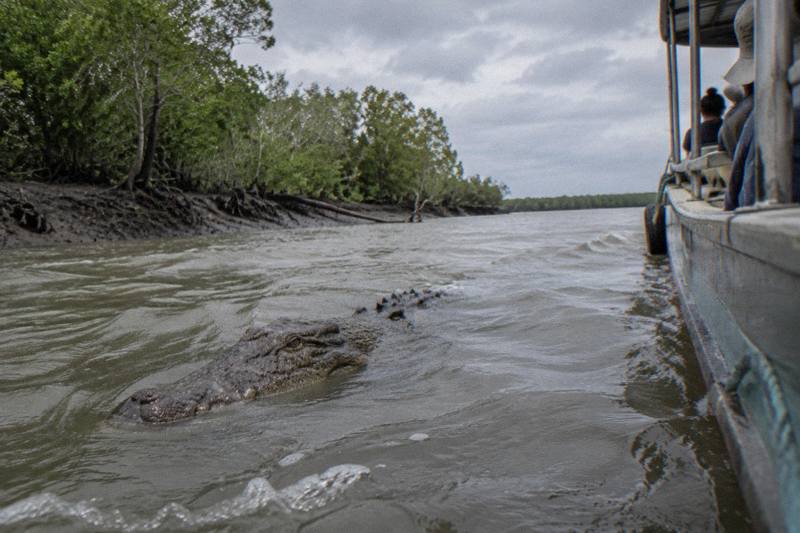
What Is The Adelaide River Jumping Crocodile Cruise?
The Jumping Crocodile cruise runs on the Adelaide River, outside Litchfield, and is the one way tours let you watch saltwater crocodiles deliberately rather than worry about them. Two combo day tours from Darwin pair the Litchfield falls with the cruise, and the cruise segment is a boat-based wildlife viewing trip, not a swim.
This is the constructive flip side of crocodile caution. The Adelaide River, east of Darwin, is famous for its crocodile cruises, where crocodiles leap clear of the water beside the boat. Watching a several-metre predator propel itself out of the river puts the Be Crocwise message in perspective fast, and doing it from a cruise boat, with a crew, is the safe version of an encounter that would be deadly from the bank.
“We loved it. Great food, decent Camp-site and the places we visited were truly beautiful. Our guide Tim was very helpful and informative.”
The featured way to combine both halves of the day is the Litchfield Escapes Litchfield and Jumping Crocodile Cruise day: about 11 hours, rated 4.9 across 2,249 reviews, from $164.87, up to 24 guests with a guide, taking in Wangi Falls, Florence Falls and Buley Rockhole, a pass-by of the magnetic termite mounds at Batchelor, and then the Adelaide River, with lunch, snacks and iced water on board; the minimum age is 4 and the Litchfield entrance fee is charged separately. The Autopia Tours mini-coach day offers a choice of wetlands or the Jumping Crocodile cruise option, from $127, rated 4.8 across 201 reviews, up to 21 guests with an accredited driver guide, meeting at The Leea Darwin on Cavenagh Street, with lunch bought on the way and a minimum age of 6. The Wildlife Tours Australia waterfalls and wildlife day from $96 per person, rated 4.7 across 83 reviews, runs Fogg Dam, the cruise and the Litchfield falls in one day, though the cruise is marked as an optional upgrade on that tour.
A combo day answers two questions at once. You swim at the managed Litchfield holes under the sign system, then you see exactly what that system is protecting you from, on a river where crocodiles are the attraction. If that pairing appeals, the deeper comparison is in how a Litchfield and crocodile cruise combo day works.
How Do You Stay Crocwise Around Litchfield Water?
Follow the sign rule above all: swim only where a swimming area open sign is posted. Camp at least 50 m from water, never feed or approach crocodiles, never swim alone, and supervise children near any waterway. Do not jump off waterfalls or rock ledges, keep glass away from swimming areas, and check the NT Parks status pages and Road Report NT before you travel.
The full Be Crocwise rule set is short enough to memorise. Saltwater crocodiles live in salt and fresh water in the Top End and are dangerous. Camp at least 50 m from the water. Never feed crocodiles, never approach them, and never dangle arms or legs from boats. In the water, never swim alone and keep children within arm's reach. Submerged rocks and logs are hazards in themselves, and conditions change after floods, which is part of why NT Parks advises on its Litchfield page that parks may close at short notice due to seasonal conditions such as flooding or bushfires.
A few Litchfield-specific habits help. The park's peak-season campground hosts at Florence, Wangi and Tjaynera Falls are a local point of contact from May to September. Mobile signal is not available in many areas, so NT Parks suggests considering a satellite phone or personal locator beacon for independent travel; a guided day tour carries its own communications. Pets are not permitted in the park at all, and glass is banned within 10 m of swimming areas.
For planning purposes, remember that parks may close at short notice, and a wet-season itinerary can shift. One operator notes that its itinerary may vary with the season and that some spots occasionally close or do not allow swimming, with a flexible plan from November to April; that is a realistic description of touring the Top End in the wet, not a defect. The question of whether a Litchfield day tour works in the wet season has its own full treatment.
None of this means crocodiles can be ruled out in Litchfield. Millions of visitors have swum at Florence and Buley under the sign system. It makes Litchfield managed, and the management only works when visitors read the signs and obey them. Bring the caution, follow the rules, and the swim at the foot of a waterfall is everything it looks like in the photos.
Common Questions About Crocodiles In Litchfield
Are There Crocs In Litchfield?
Saltwater crocodiles can be present in any Top End waterway, including Litchfield's, and the park is never described as croc-free. The managed swimming holes are safe to enjoy because Parks and Wildlife surveys them and posts a swimming area open sign, not because crocodiles cannot reach the water.
Is It Safe To Swim At Litchfield Waterfalls?
Swim only where a swimming area open sign is posted. Florence Falls, Buley Rockhole and the Cascades are listed all year except during extreme flooding; Wangi Falls is dry-season swimming only. NT Parks states it is never completely safe to enter the water, so follow the signs, never swim alone and supervise children.
Why Is Swimming Not Allowed At Tolmer Falls?
Swimming and camping are not allowed at Tolmer Falls under NT Parks rules. The official page states the restriction without qualification. The 400 m sealed path to the viewing platform is accessible to people of all abilities and the falls are a spectacular stop regardless.
Do Guided Litchfield Tours Guarantee A Swim?
No tour guarantees swimming. Operators describe swimming as a seasonal opportunity controlled by NT Parks, and guides work to the posted status on the day. If swimming matters to your trip, travel in the dry season and pick a tour whose stops include the managed holes such as Florence Falls and Buley Rockhole.
Can You See Crocodiles Safely Near Litchfield?
Yes, on an Adelaide River Jumping Crocodile cruise. Two combo day tours from Darwin pair the Litchfield falls with the river cruise, including the Litchfield Escapes day from $164.87, rated 4.9 across 2,249 reviews. The cruise is a boat-based wildlife viewing trip on a separate river, not a swim.
Does A Tour Guide Keep Crocodiles Away?
No. A guide does not change what lives in the water. What a guide provides is knowledge of which areas are signed open, which are permanently closed and how the season rules apply, so the group only swims at managed locations under the posted signs.