Is It Safe To Swim In Litchfield?
Straight answers on swimming safety in Litchfield National Park: which waterfalls are open to swimmers, where swimming is never allowed, and what NT Parks rules say about crocodiles.
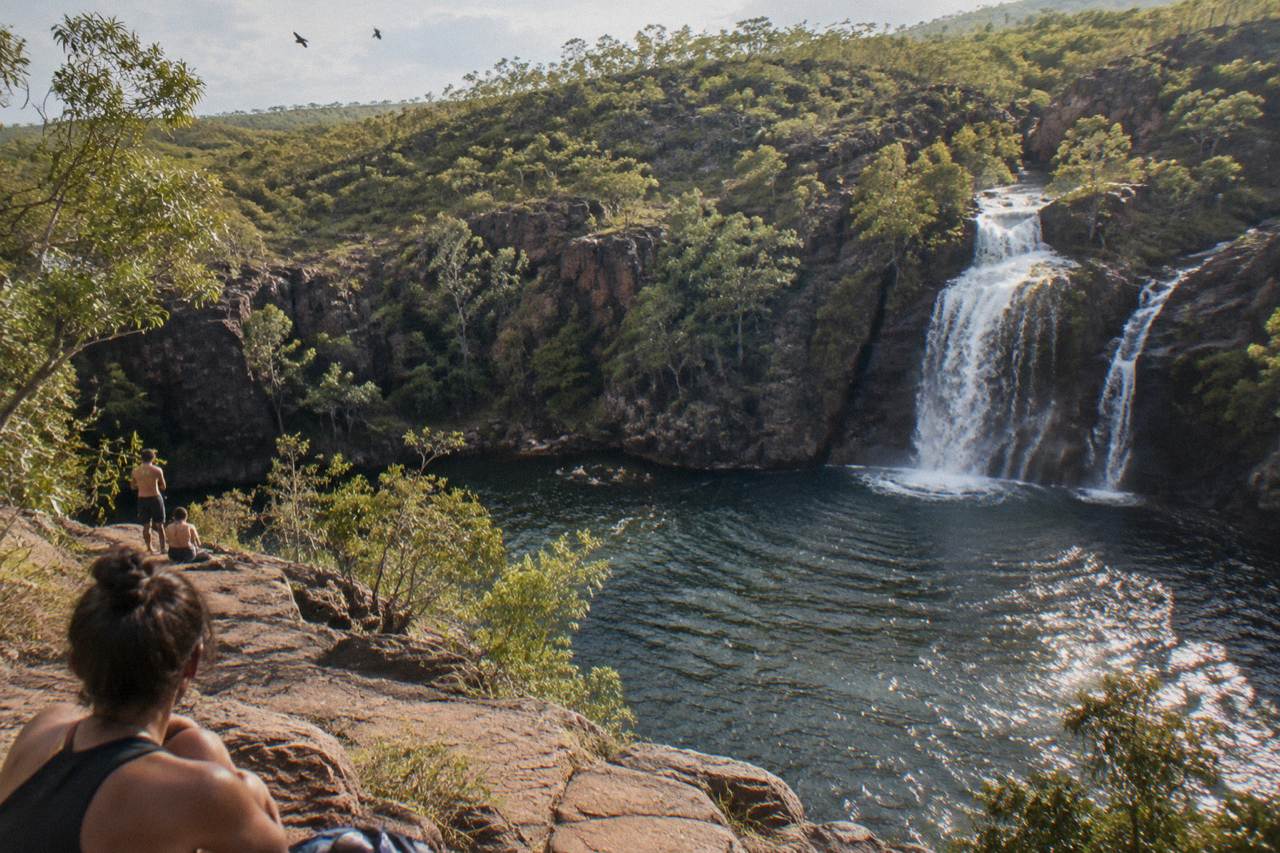
Yes, swimming in Litchfield is safe where, and only where, NT Parks has posted a swimming area open sign. Florence Falls, Buley Rockhole and the Cascades are open all year except during extreme flooding; Wangi Falls is dry-season swimming. Saltwater crocodiles can be in any Top End waterway, so never swim outside a signed area. For a closer look at that risk, the guide to crocodiles in Litchfield explains what NT Parks checks before declaring a swimming hole open.
That single sign rule is the whole framework. NT Parks puts it plainly: only swim in an area that has a swimming area open sign, and if it does not have one, do not swim there. The area may not be safe or free from saltwater crocodiles. Parks and Wildlife tests water quality, checks water flow and carries out crocodile surveys at the swimming sites it manages, and the sign is the visible output of that work. Where the sign says open, the risk has been checked and managed. Where there is no sign, there has been no check.
Litchfield sits in the Top End, roughly 120 km south-west of Darwin, and the park's swimming spots sit inside a managed system, not a wilderness free-for-all. Some of the best known waterholes are swimmable for most or all of the year. Others are dry-season only, a handful are permanently closed to swimming, and the status of any given site can change after flooding. The park also warns that it may close areas at short notice due to seasonal conditions such as flooding or bushfires, so a swim you enjoyed in May can be off limits by January.
A guided day tour does not exempt you from any of this. What a tour does is put you at the signed, managed sites with someone who follows the status closely, which is a different thing from eliminating the risk. This article walks through every swimmable site, the permanently closed ones, the crocodile reality, the specific NT Parks water rules, and how a Darwin day tour fits into a safe swim. For the wider question of which waterfalls sit on which itineraries, see the companion guide to Litchfield waterfalls on a day tour.
Where Is Swimming Allowed In Litchfield National Park?
Swimming is allowed at Florence Falls, Buley Rockhole and the Cascades all year except during extreme flooding, and at Wangi Falls, Walker Creek, Tjaynera Falls, Surprise Creek Falls and Central Valley during the dry season only, always where a swimming area open sign is posted.
The official NT Parks seasonality table divides Litchfield's swimming sites into two groups. The first group swims all year except during extreme flooding: Florence Falls, Buley Rockhole and the Cascades. The second group is dry season only: Wangi Falls, Walker Creek, Tjaynera Falls, Surprise Creek Falls and Central Valley. On top of that, Walker Creek swimming is permitted unless temporarily signed for closure due to environmental or wildlife hazards. The sign at the water's edge is always the final word.
Here is what the table means site by site, drawn from the official park pages:
| Swimming site | Official seasonality | Notes from the park pages |
|---|---|---|
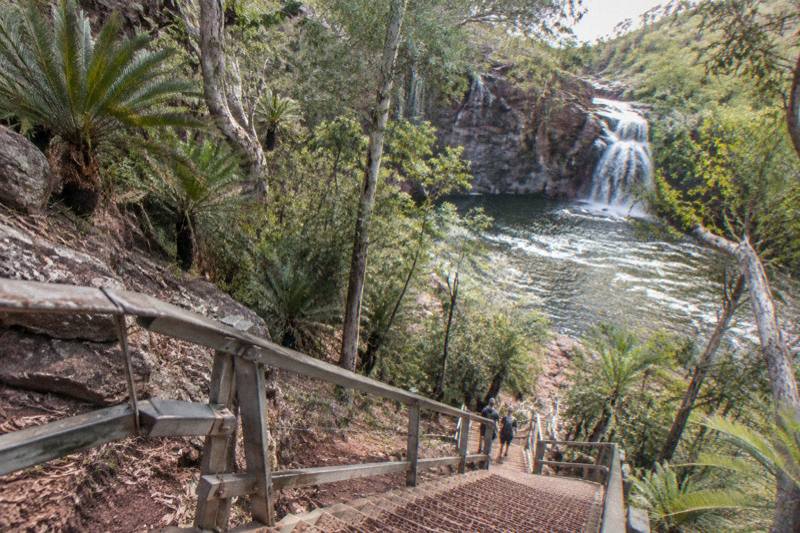
| Florence Falls | All year except extreme flooding | 160 steps via Shady Creek (1 km, 30 min, Grade 3) or a 1 km monsoon walk; can also swim in Florence Creek at the top |
| Buley Rockhole | All year except extreme flooding | Series of shallow and deep holes; limited parking, park at Florence and use the 3.2 km Florence Creek walk |
| Cascades | All year except extreme flooding | Lower walk closed in the wet season; Upper walk Grade 4; quieter than the main falls |
| Wangi Falls | Dry season only | Large deep pool, swim right up to the falls; most accessible swimming hole in Litchfield |
| Walker Creek | Dry season only | Permitted unless signed for closure; 7 walk-in campsites |
| Tjaynera Falls | Dry season only | 3.4 km return walk, Grade 3, swim in the pool |
| Surprise Creek Falls | Dry season only | Reached via Reynolds Track, 4WD only |
| Central Valley | Category D | Locked gate with key access, high-clearance 4WD only, no caravans or motorhomes |
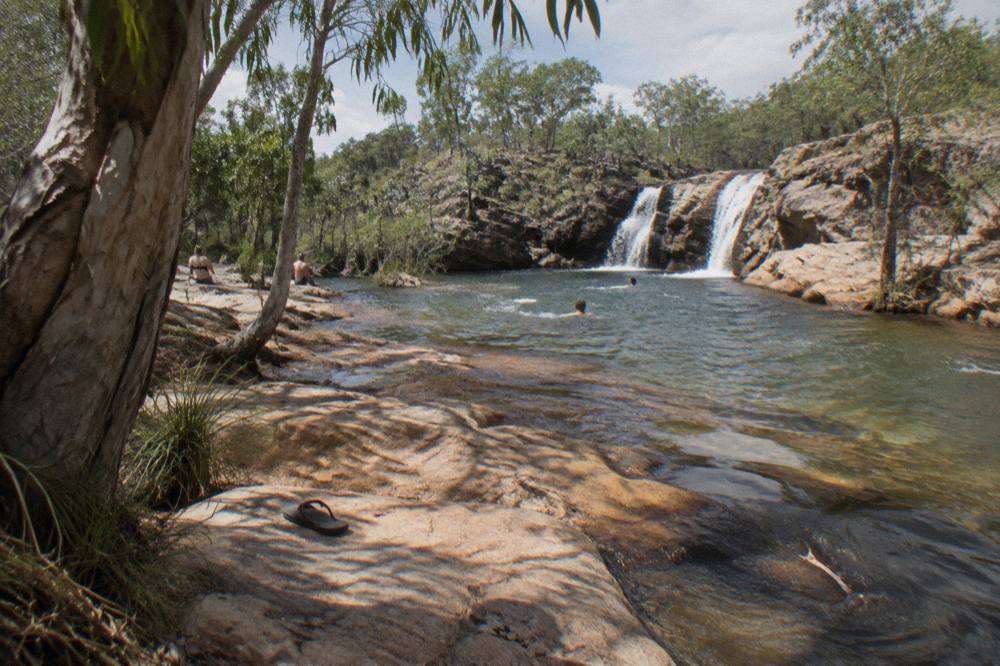
Two practical points follow from that table. First, the all-year sites, Florence and Buley, are the ones a day tour can rely on across the seasons, which is why nearly every Darwin itinerary includes them. Second, the dry-season sites tend to sit behind walk-in or 4WD access, so they are mostly self-drive territory rather than tour stops. NT Parks also advises checking Road Report NT before travel, since access can change with the season.
If you want a guided day that includes the reliable swimmers, the Litchfield Escapes Litchfield and Jumping Crocodile Cruise day visits Wangi Falls, Florence Falls and Buley Rockhole before an Adelaide River crocodile cruise, up to 24 guests, from $164.87, rated 4.9 across 2,249 reviews. Free cancellation is stated. The same logic applies to the questions covered in how many days you need in Litchfield, since a second day opens up the walk-in sites.
Which Litchfield Waterfalls Are Dry Season Swimming Only?
Wangi Falls, Walker Creek, Tjaynera Falls, Surprise Creek Falls and Central Valley are dry season only for swimming, per the official NT Parks table.
Wangi Falls is the clearest example of why the sign matters more than the scenery. The falls flow all year, the large deep pool lets you swim right up to the falls, and NT Parks calls it the most accessible swimming hole in Litchfield, with a paved path from the car park and a cafe with undercover seating. Yet the official table lists Wangi as dry season only for swimming. The water looking inviting in the wet months tells you nothing about whether the sign says open. If you are planning around Wangi specifically, the detailed Wangi Falls tour guide covers what a day there involves.
The rule for reading Wangi is the same one that governs the rest of the park. The official guidance lists Wangi as dry-season swimming, full stop. The wet season, roughly November to April, is when the dry-season sites close their swimming, and the closures lift as conditions allow. The park's status page is where the current sign state lives, and it is the thing to check before any wet-month trip, whether you are driving yourself or riding a coach.
Walker Creek, Tjaynera and Surprise Creek are dry-season swimmers that most day-trippers never reach, because they sit behind walk-in campsites or the 44 km Reynolds Track, which is 4WD only. Surprise Creek Falls and its campground close for the wet, with access impassable and an expected opening after the wet season, which is the pattern these sites follow every year. The deeper dive on one of the all-year sites is in whether you can swim at Buley Rockhole.
Where Can You Never Swim In Litchfield?
Swimming is never allowed at Tolmer Falls, Greenant Creek, Tjaetaba Falls and the Lost City. At Tolmer the park page states swimming and camping are not allowed; at Greenant Creek the plunge pool and downstream area are a sacred site, and the Lost City has no swimming at all.
Tolmer Falls is the one that catches day tours, because so many itineraries stop there for the view. The viewing platform is 400 m along a sealed path from the car park, accessible to people of all abilities, and NT Parks notes the top time to see the falls is during the wet season when the water is flowing at its best. None of that changes the rule: no swimming, and no camping either. You look, you do not get in. The Tolmer Falls tour guide covers the viewing experience in detail.
Greenant Creek is a different category. The 2.7 km return walk (1.5 hr, Grade 3, steep in sections) leads to Tjaetaba Falls, whose plunge pool and the downstream area are a sacred site. The park asks visitors not to swim there, and notes a tiny pool above the falls that is not recommended. This is a cultural closure, not a safety suggestion, and it deserves the same respect as a crocodile warning.
The Lost City, the weathered sandstone pillars on a 10 km dirt track off Litchfield Park Road, closes to vehicles entirely during the wet season when the track becomes impassable, and it has no swimming and no facilities in any season. The general water rules still apply everywhere else: no glass within 10 m of swimming areas, don't jump off any surface, especially waterfalls and rock ledges, and remember that submerged rocks and logs sit below water that changes after floods. For more on the safety question visitors ask most, see are there crocs in Litchfield.
How Do Crocodiles Change Swimming Safety At Litchfield?
Saltwater crocodiles live in salt and fresh water in the Top End and are dangerous, and NT Parks states they can be in any Top End waterway and it is never completely safe to enter the water. Signed swimming areas are the managed exceptions, which is why the sign rule exists.
This is the sentence worth reading twice: it is never completely safe to enter the water in the Top End. NT Parks does not soften that, and neither will this page. The Be Crocwise guidance is direct about behaviour on land as well as in it: camp at least 50 m from water, never feed or approach crocodiles, and treat every waterway as capable of holding one. The official Be Crocwise campaign pages set out the full guidance, and they are the source for any crocodile question in the Northern Territory.
What makes Litchfield swimmable at all is the management behind the signs. Parks and Wildlife tests water quality, checks water flow and carries out crocodile surveys, and a swimming area open sign is the visible result of that work at a managed site. When the sign is absent, the checks are absent too, which is the actual reason an unsigned waterhole is off limits rather than the water merely looking risky. The full index of guides sits on Litchfield National Park Tours.
The crocodile presence is also why the itineraries that pair Litchfield with an Adelaide River cruise are popular: they show you the animal in its element from a boat, then swim only at the managed sites. The Litchfield Escapes Litchfield and Jumping Crocodile Cruise day does exactly that, about 11 hours, from $164.87, rated 4.9 across 2,249 reviews, meeting at Lizards Bar and Restaurant on Mitchell Street, with pickup stated, lunch, snacks and iced water. Note the Litchfield entrance fee is charged separately on that tour. The crocodile cruise combination guide compares the options.
What Are The NT Parks Swimming Rules At Litchfield?
The core rules are: only swim where a swimming area open sign is posted, never swim alone, supervise children at all times, no glass within 10 m of swimming areas, and never jump off waterfalls or rock ledges. Submerged rocks and logs lie below the surface, and conditions change after floods.
Each of those rules carries a specific weight. Never swim alone and supervise children are about the speed at which things go wrong: the deep water at Wangi, for instance, becomes deep quickly, and the park notes it is not safe to swim at the top of the falls. The no-jumping rule targets the ledges that look like launch points at every waterfall in the park. The glass rule protects bare feet on the paths around the pools. None of them are negotiable, and rangers enforce them alongside the sign system.
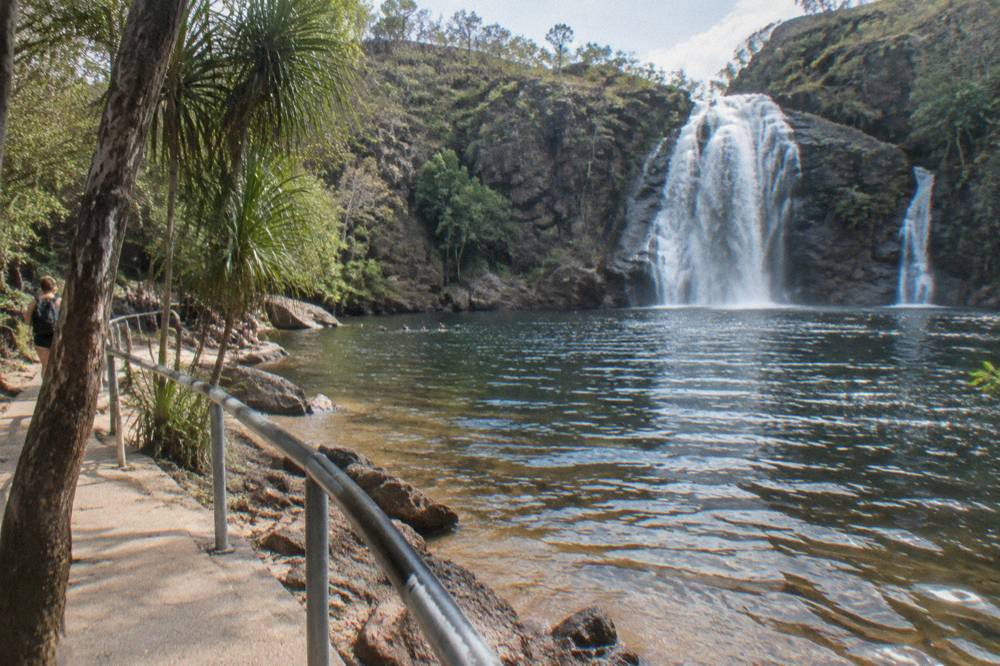
The rules extend to how you behave around water even when you are not in it. Camp at least 50 m from waterways if you are staying overnight, wash 50 m from water, boil all water before drinking it, and remember that pets, generators and fireworks cannot be brought into the park. The official swimming in parks safety page carries the full rule set, and it is the authority this article draws from.
One more planning detail belongs here. NT Parks advises that mobile signal is not available in many areas of the park and suggests considering a satellite phone or personal locator beacon, with 000 for emergencies. For a day visitor on a tour this mostly does not matter, the coach carries communications, but it is a real consideration for self-drivers heading to the walk-in creek sites, and it is one of the quiet arguments for a guided day. The full packing angle is covered in what to bring on a Litchfield day tour.
Does A Guided Day Tour Make Swimming Safer?
A day tour does not make the water safer, the signs do that. What a tour adds is that you arrive at the managed, signed sites with an operator who works around the seasonality every week, which in practice means Florence Falls and Buley Rockhole anchor most itineraries all year.
Be clear about what is being claimed here. The crocodile risk, the sign rule and the seasonality table apply to a coach passenger exactly as they apply to a swimmer who drove in alone. A guide does not change the water. What a guided day does is remove the decisions where mistakes happen: which site to visit in which month, whether the access road is open, and whether the swim looks fine but is not signed. Operators run these itineraries through the seasons and adjust to the status page as a matter of course.
Group sizes and inclusions differ between tours, and those differences matter to a swimmer. The Litchfield VIP Tours day tour takes a maximum of 11 guests, from $151 per person, rated 4.8 across 203 reviews, with Darwin accommodation pickup from 8 to 8.15 am and a return about 5.30 pm, and it includes the park pass, lunch, snacks and pool noodles, visiting Berry Springs and the Litchfield waterfalls. Free cancellation is stated.
For swimmers who want more of the park in one day, the AAT Kings full-day coach tour with lunch runs up to 50 guests, 10.5 hours from Darwin hotel pickup with a return at about 5.15 pm, from $151 per person, rated 4.5 across 210 reviews, stopping at Florence Falls, Tolmer Falls, Wangi Falls, the magnetic termite mounds and Howard Springs Nature Park, with lunch included and the park pass charged separately. Swimming on any tour is a seasonal opportunity controlled by NT Parks, so the bigger the coach, the more the day bends toward viewpoints over plunges in the wet months. The trade-offs between riding and driving yourself are laid out in Darwin to Litchfield by tour or car.
What Should Families Know Before Swimming At Litchfield?
Families should know three things: children must be supervised at all times near water, the deep water at Wangi becomes deep quickly, and Buley Rockhole's mix of shallow and deep holes makes it the natural family pick among the all-year sites. Minimum ages on tours are per operator, not a park rule.
Supervision is the rule NT Parks states without qualification, and the park's own site descriptions explain why. At Wangi the water becomes deep quickly, there is a handrail and a few steps on the paved path from the car park, and swimming is not allowed above the falls. At Florence the descent to the pool is 160 steps via Shady Creek or an uneven cobble path on the monsoon walk. Buley Rockhole is a series of shallow and deep holes where the park's own wording calls it a place to lounge around in the natural flowing water, which suits younger swimmers better than a plunge pool, though it has no accessibility ramps.
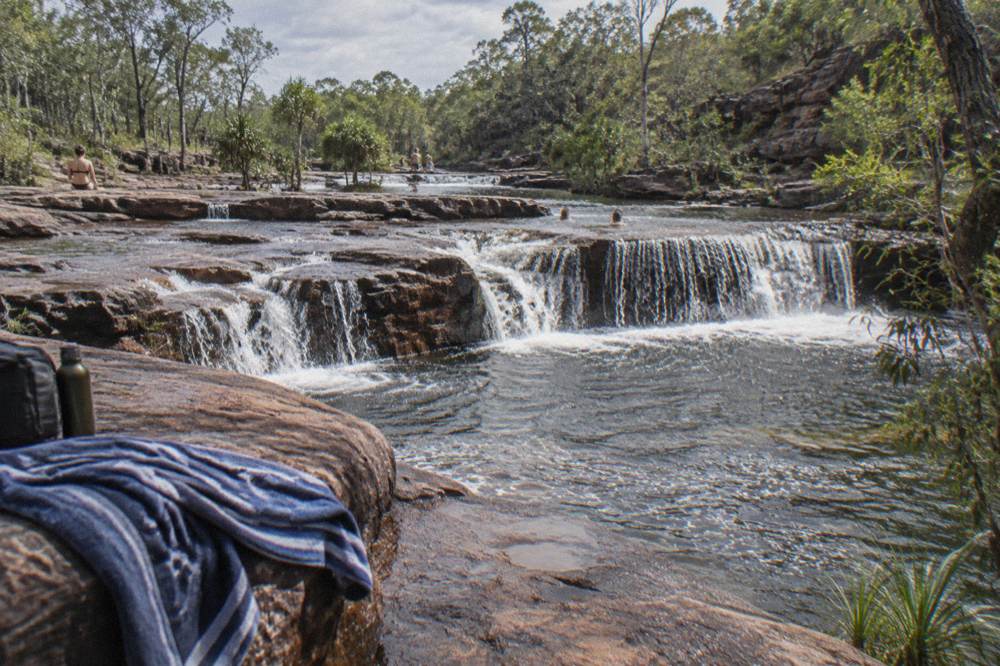
On the tour side, age rules belong to each operator, so check the booking page for the day you want. The Autopia Tours mini-coach day carries a minimum age of 6, and the Litchfield Escapes crocodile cruise day carries a minimum age of 4, both operator rules for those tours only. The AAT Kings coach day and the Litchfield VIP Tours day state no minimum age, so families with younger children have options across the price range. The Territory Expeditions three-day expedition sets a minimum age of 8, though that is a camping trip rather than a swim day.
One packing note that follows from the family angle: the no-glass rule within 10 m of swimming areas turns any glass bottle into a liability, and the park has no bins, so everything you carry in comes out with you. Families planning a wet-season trip should also read whether you can do a Litchfield day tour in the wet season, since the dry-season swimming sites will be closed and the day reshapes around the all-year ones. The question of cost, from the NT Parks pass to tour fares, is separate, and whether Litchfield National Park is free covers it honestly.
All three visit the managed swimming sites, and every fare shown is a from price in USD on the operator's booking page, with free cancellation stated on each.
Common Questions About Swim Safety In Litchfield
Is It Safe To Swim In Litchfield?
Yes, where a swimming area open sign is posted. Florence Falls, Buley Rockhole and the Cascades are open all year except during extreme flooding, and Wangi Falls is dry-season swimming. Saltwater crocodiles can be in any Top End waterway and it is never completely safe to enter the water, so never swim outside a signed, managed area.
Can You Swim At Wangi Falls All Year?
No. Official guidance lists Wangi as dry-season swimming, even though the falls flow all year round. The large deep pool is open to swimmers in the dry season where the sign says open, and the seasonality is lifted or reimposed by NT Parks as conditions change.
Why Can't You Swim At Tolmer Falls?
The official park page states that swimming and camping are not allowed at Tolmer Falls. The site is enjoyed from a 400 m sealed path to a viewing platform accessible to people of all abilities, and the wet season is the top time to see the falls flowing at their best.
Do Crocodiles Stop You Swimming In Litchfield?
They shape where you swim. Saltwater crocodiles live in salt and fresh water in the Top End and can be in any Top End waterway, so NT Parks manages signed swimming areas through surveys and water checks. Swim only where a swimming area open sign is posted and follow the Be Crocwise guidance around water.
Does A Guided Tour Guarantee A Swim?
No tour can promise a swim. Guided days do reliably visit the managed sites, Florence Falls and Buley Rockhole among them, which are open all year except during extreme flooding.
Is Buley Rockhole Safe For Kids?
Buley Rockhole is a series of shallow and deep holes where NT Parks describes lounging in the natural flowing water, and it suits families better than a deep plunge pool. Children must be supervised at all times, the site has no accessibility ramps, and parking is limited, with overflow at Florence via the 3.2 km Florence Creek walk.